
A Higher Love
The Only Love That Matters...

Dear Reader,
Ever since I was a little girl, I wanted to fall in love. I didn’t spend much time focusing on my future husband’s outward appearance. I could have cared less if he was Black, white, or purple. I didn’t care about how much money he made or what car he drove. I just wanted to be in love.
The type of love I longed for, is the kind I read about in books. First, it was the fairytale retellings in the teen section of the library. Then, eventually around 12th grade, I found myself glued to the epic love stories in Jane Eyre, Romeo and Juliet, and in the letters written by famous poets like John Keats.
I latched onto dramatic, confessions of love found in passages like this:
"Do you think I can stay to become nothing to you? Do you think I am an automaton?--a machine without feelings? and can bear to have my morsel of bread snatched from my lips, and my drop of living water dashed from my cup? Do you think, because I am poor, obscure, plain, and little, I am soulless and heartless? You think wrong!...I am not talking to you now through the medium of custom, conventionalities, nor even of mortal flesh;--it is my spirit that addresses your spirit; just as if both had passed through the grave, and we stood at God's feet, equal,--as we are!" — Jane Eyre

My high school English teacher is to blame for introducing me to John Keats, the 19th century British Romantic poet. John Keats fell in love and made a muse out of his neighbor, Fanny Brawne. He turned his longing into brilliant poems about her which were only popularized after his death. A bio-pic about his romance and writing came out in 2009, which my English teacher also introduced me to. I was so moved by that love story. I watched the movie again and again, thinking not so much about the poems that would be studied for generations to come, but about how badly I wanted an epic love story that I could write poems about too.
“Bright star, would I were stedfast as thou art—
Not in lone splendour hung aloft the night
And watching, with eternal lids apart,
Like nature’s patient, sleepless Eremite,
The moving waters at their priestlike task
Of pure ablution round earth’s human shores,
Or gazing on the new soft-fallen mask
Of snow upon the mountains and the moors—
No—yet still stedfast, still unchangeable…”
— John Keats
And so I entered college, into adulthood, with a yearning for this earth shattering, knee buckling, type of love. I searched for it on a college campus (like my parents found each other). I searched for it as a young attorney in between runs to court, at the sparsely attended Muslim networking scenes, and in the masjid. I had a blueprint for love through literature and I thought I could find it in the wild.
But it took finding love, then being betrayed by it through divorce, to make me realize that I was searching for the wrong type of love all along.
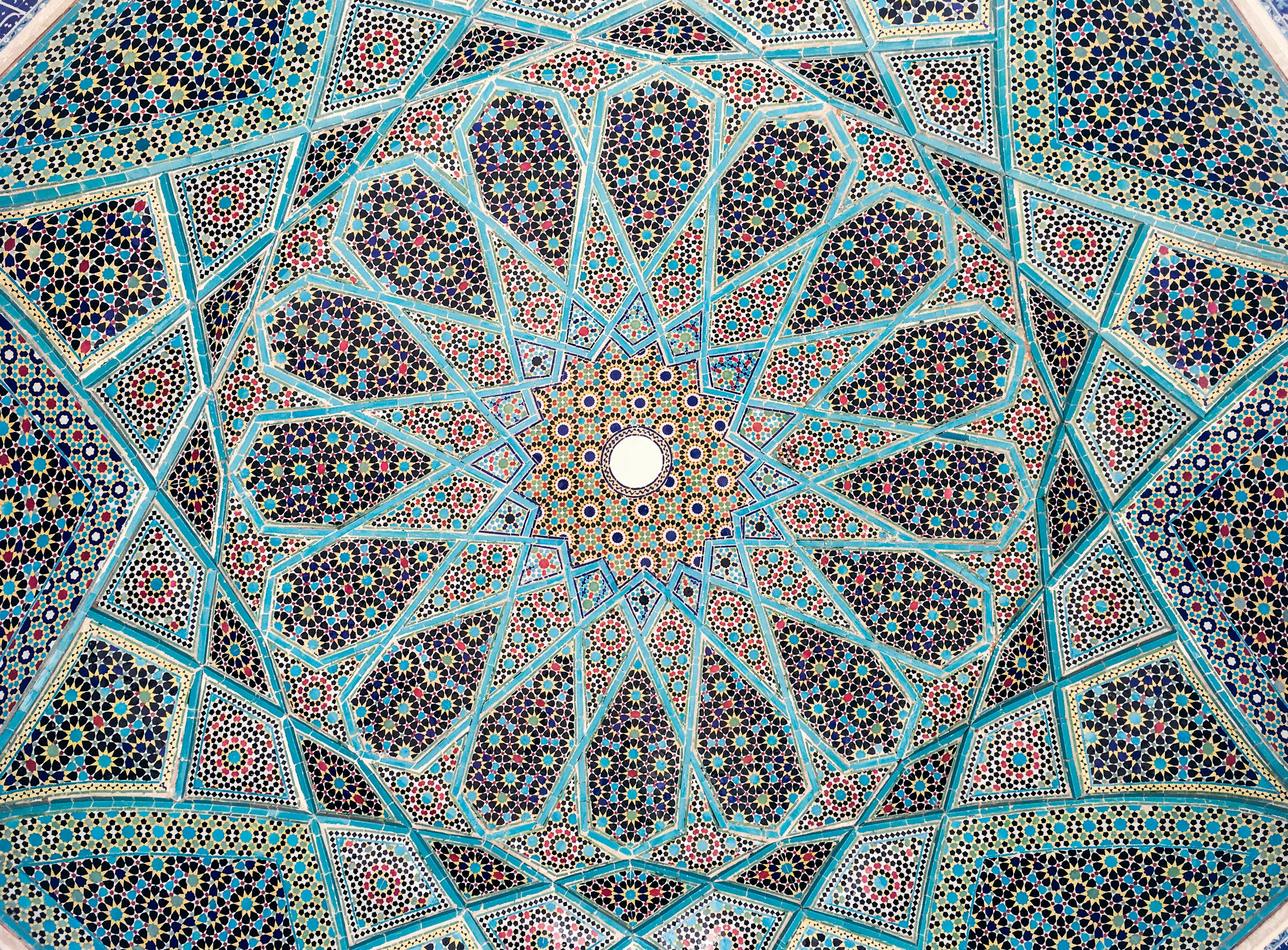
The renowned 13th/14th century Persian Muslim poets like Rumi and Hafez understood what type of love to dedicate their lives to. These poets spun together verses of sweet adoration to their beloved— to God. Their poetry evoked feelings of longing and distress in not being able to be united with Allah, the most High, the most Merciful. Their poems which are sometimes hard to decipher, are focused on inculcating a connection to the heavens, not to other human beings. They knew what it meant to seek a higher love.
Hafez’s Tidings of Union
Where are the tidings of union? that I may arise-
Forth from the dust I will rise up to welcome thee!
My soul, like a homing bird, yearning for Paradise,
Shall arise and soar, from the snares of the world set free.
When the voice of thy love shall call me to be thy slave,
I shall rise to a greater far than the mastery
Of life and the living, time and the mortal span:
Pour down, oh Lord! from the clouds of thy guiding grace.

The first time I listened to Vincent Mcmorrow’s Higher Love I didn’t get it. I assumed the 2012 hit was about seeking a romantic love— a type of love that was better than the rest because it was real, raw, and pure.
But that’s not the type of love he’s talking about. He’s speaking about a divine love:
Think about it, there must be higher love
Down in the heart or hidden in the stars above
Without it, life is wasted time
Look inside your heart, I’ll look inside mineThings look so bad everywhere
In this whole world, what is fair?
We walk blind and we try to see
Falling behind in what could beBring me a higher love
Bring me a higher love
Bring me a higher love
Where’s this higher love I’ve been thinking of?
Maybe Mcmorrow was also a lover of Rumi instead of a lover of Keats. Or maybe he just had a strong connection to his faith tradition which set his priorities straight from a young age. Wherever his inspiration, his words resonated with me. And though I’m off music until the end of Ramadan— to limit distractions and increase concentration— another form of poetic verse has reoriented my priorities: the Quran.
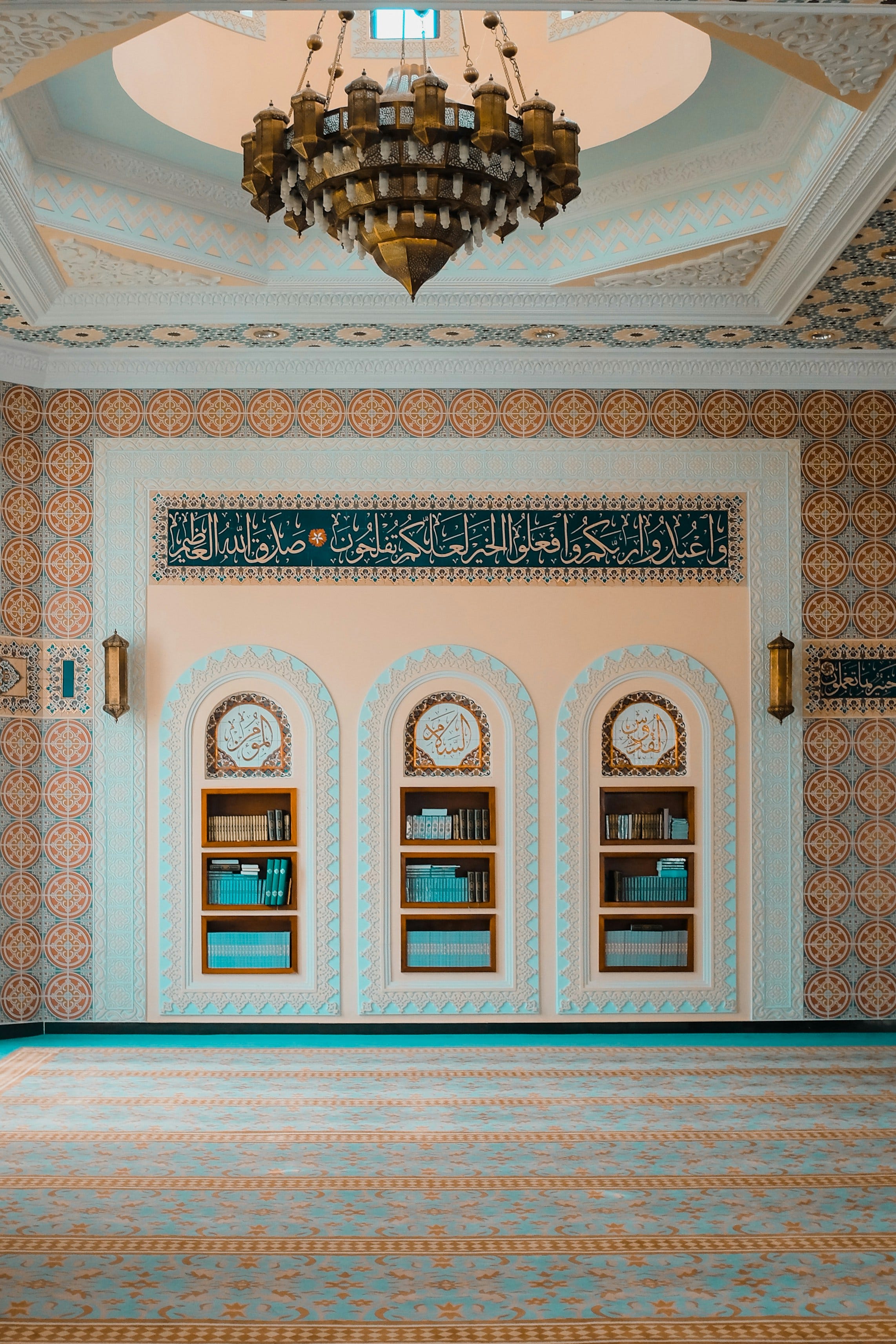
This Ramadan, I’ve found the calls to a Divine love not in the words of these famous novelists, poets, or songwriters, but instead within the pages of the Holy Quran. I’ve immersed myself in the beauty of the Quran and reminders about the life of the Prophet Muhammad SWS and his companions. The way our beloved Prophet SWS, his companions, and the scholars that followed after him, all talk about a deep longing to be with Allah is awe-inspiring.
I have been amazed by the stories of prominent Muslims throughout Islamic history making major feats to live good and just lives in service of pleasing Allah SWT. I loved learning about the difficulties of the many battles the Prophet faced to defend Islam and how in the face of a death threats and deadly boycotts, he continued to strive towards Allah. Each step of difficulty was taken not as a simple commandment, but as a profession of love and adoration for Allah the most high.
Shaykh Omar Sulieman’s Ramadan series about the 99 names served as another reminder as to how cultivating a connection with Allah is central to our survival. In the Youtube series, Shaykh Omar shows us how to call upon Allah in dua by really tapping into the meaning of His SWT’s names. He ends each episode with showing us how to make sincere dua, calling out to Allah, like a lover pleading to their beloved.
When listening to scholars talk about how to cultivate a strong relationship with Allah, it reminds me of the type of relationship that I used to strive for in seeking romantic love.
I dreamed of a love that I would stay up talking to all night; a man that knew what I was thinking before I said it; a husband that would always be there for me in sickness and in health.
But I haven’t found that type of relationship with a man. Maybe that’s because I already had that with Allah?
I stay up late at night talking to Allah, making sincere dua to him to change my condition, keep my heart stedfast on the deen, and reunite me and my loved ones in Jannah. But even if I didn’t utter it, Allah would know what I’m thinking. He knows the hearts and minds of his servants. He is the one who could read my mind without me saying anything. And unlike any man, Allah is always there for me. Allah is there when I’m happy, sad, or sick. He is always attentive and always apt to attend to my every need.
"Indeed, it is We Who created humankind and fully know what their souls whisper to them, and We are closer to them than their jugular vein."- Surah Qaf, 50:16
Maybe that type of all consuming love that the poets and novelists wrote about is so rare because that type of love is only made for the relationship we have with Allah SWT. Maybe in this deformed society where people cast aside prospects because of skin color, age, or job title, the only type of dependable and practical love we should seek is love of the Divine. Maybe if both you and I, dear reader, understand this not just on a conceptual level, but deep within our hearts, we can be free from the rat race of searching for romantic love. Maybe we can free ourselves from the self-deprecation and unrequited escapades that come with searching for a spouse. Maybe all we need is love— from the Divine, from Allah SWT.
In these last few precious days of Ramadan, I hope you’ll pray for a stronger connection with Allah, the most High, the most Merciful.
I pray you find yourself in love with Islam and in love with your Lord who made us from clay. He chose you and I to love him and we are blessed to be on this elevated path to paradise. InshaAllah. Isn’t that the biggest blessing?
In these dark times, I pray the love you search for is the love that leads you to the highest levels of paradise.
Ramadan Mubarak.
Love,
ND
P.S. I am supporting this fundraising campaign through Launchgood to raise money for Sudan. Please donate if you are able. I get ZERO commission. It’s all arranged through the organization Human Appeal. Click here to support.
ameen, gorgeous post
Wonderfully written ♥️